
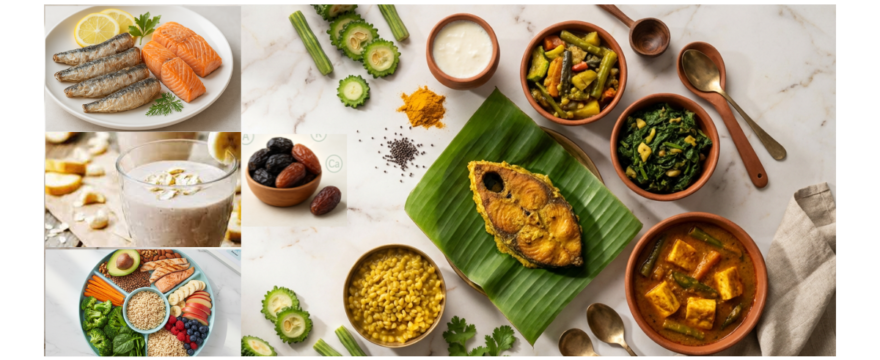
Bengali cuisine is famous for its rich flavors and diverse dishes. However, many people believe that traditional Bengali food isn’t suitable for weight loss. Fortunately, this isn’t true. You can enjoy authentic Bengali flavors while maintaining a healthy diet.
In this guide, we’ll share 15 low-calorie Bengali recipes. Moreover, we’ll provide a complete diet chart to help you lose weight effectively. These recipes use fresh ingredients and traditional cooking methods. Therefore, you can satisfy your taste buds without consuming excess calories.
Why Choose Low-Calorie Bengali Recipes?
Bengali food culture emphasizes fish, vegetables, and lentils. Consequently, it offers natural weight-loss advantages. Additionally, these ingredients are rich in protein and fiber.
Traditional Bengali cooking uses mustard oil and minimal spices. Furthermore, steaming and light frying are common methods. Thus, these techniques preserve nutrients while keeping calories low.
By choosing low-calorie options, you can maintain your cultural food identity. At the same time, you’ll achieve your fitness goals successfully.
15 Delicious Low-Calorie Bengali Recipes
1. Shukto (Mixed Vegetable Stew)


Calories per serving: 120 kcal
Shukto is a traditional Bengali dish packed with vegetables. This recipe uses bitter gourd, drumsticks, and raw banana. Moreover, it includes minimal oil and no sugar.
Ingredients:
- Bitter gourd (100g)
- Raw banana (80g)
- Drumstick (50g)
- Mustard paste (1 tsp)
- Turmeric powder (½ tsp)
Preparation: First, chop all vegetables into small pieces. Then, boil them with turmeric and salt. Next, add mustard paste and simmer for 10 minutes. Finally, serve hot with brown rice.
Image Alt Text: Low-calorie Bengali shukto recipe for weight loss
2. Steamed Hilsa (Bhapa Ilish)
Calories per serving: 180 kcal
Hilsa fish is rich in omega-3 fatty acids. Additionally, steaming preserves its nutritional value. This method requires no deep frying.
Ingredients:
- Hilsa fish (150g)
- Mustard paste (2 tsp)
- Green chilies (2)
- Mustard oil (1 tsp)
- Turmeric (½ tsp)
Preparation: Apply mustard paste and turmeric to the fish. Subsequently, wrap it in a banana leaf. Then, steam for 15-20 minutes. Serve immediately with plain rice.
3. Moong Dal (Yellow Lentil Soup)

Calories per serving: 140 kcal
Moong dal is light and easy to digest. Furthermore, it provides excellent protein for muscle building. This recipe uses minimal oil and spices.
Ingredients:
- Moong dal (100g)
- Turmeric (½ tsp)
- Cumin seeds (½ tsp)
- Ginger paste (½ tsp)
- Ghee (1 tsp)
Preparation: Boil the dal until soft. Meanwhile, temper cumin in ghee. Next, add ginger and turmeric. Finally, mix everything and serve.
4. Tomato Chutney (Low-Sugar Version)
Calories per serving: 60 kcal
Bengali meals are incomplete without chutney. However, traditional versions contain excess sugar. This recipe uses natural sweetness from tomatoes.
Ingredients:
- Tomatoes (200g)
- Raisins (10g)
- Panch phoron (½ tsp)
- Red chili powder (½ tsp)
- Salt to taste
Preparation: First, cook the tomatoes until soft. Then, add raisins for sweetness. Next, add spices and cook for 5 minutes. Therefore, you get a healthy alternative to sugary chutneys.
5. Chingri Malai Curry (Light Version)

Calories per serving: 200 kcal
This prawn curry uses coconut milk alternatives. Moreover, it significantly reduces the overall fat content. You’ll still enjoy the creamy texture and authentic taste.
Ingredients:
- Prawns (150g)
- Low-fat coconut milk (100ml)
- Onion paste (2 tbsp)
- Ginger-garlic paste (1 tsp)
- Bay leaf (1)
Preparation: Sauté prawns with minimal oil. Then, add onion and ginger-garlic paste. Next, pour coconut milk and simmer. Finally, garnish with coriander leaves.
6. Begun Bhaja (Baked Eggplant)
Calories per serving: 80 kcal
Instead of deep-frying, we bake the eggplant. Consequently, this method cuts calories by 60%. Additionally, baking retains more nutrients than frying.
Ingredients:
- Eggplant (150g)
- Turmeric (½ tsp)
- Salt (to taste)
- Mustard oil spray
Preparation: Slice eggplant thinly. Subsequently, apply turmeric and salt. Then, spray minimal oil and bake at 180°C for 20 minutes. Serve as a side dish.
7. Pui Shaak Chorchori (Malabar Spinach Stir-Fry)
Calories per serving: 90 kcal
Leafy greens are excellent for weight loss. Furthermore, this recipe uses the dry cooking method. Therefore, it requires minimal oil.
Ingredients:
- Pui shaak (200g)
- Potato cubes (50g)
- Panch phoron (½ tsp)
- Green chili (1)
- Mustard oil (1 tsp)
Preparation: Heat oil and add panch phoron. Next, add vegetables and stir continuously. Then, cook without water until crispy. Season with salt and serve.
8. Doi Maach (Light Yogurt Fish Curry)
Calories per serving: 160 kcal
This curry uses low-fat yogurt. Moreover, it contains no heavy cream or coconut milk. The result is a tangy, delicious dish.
Ingredients:
- Fish pieces (150g)
- Low-fat yogurt (100g)
- Turmeric (½ tsp)
- Red chili powder (½ tsp)
- Onion paste (2 tbsp)
Preparation: Marinate the fish with yogurt and spices. Meanwhile, prepare the gravy with onion paste. Then, cook the fish in the gravy for 15 minutes. Serve with roti.
9. Chanar Dalna (Cottage Cheese Curry)
Calories per serving: 170 kcal
Cottage cheese provides excellent protein. Additionally, this recipe uses minimal oil for cooking. You can make this dish quickly.
Ingredients:
- Paneer cubes (100g)
- Tomato puree (100ml)
- Ginger paste (1 tsp)
- Cumin powder (½ tsp)
- Coriander powder (½ tsp)
Preparation: Lightly pan-fry paneer cubes. Then, prepare the gravy with tomato and spices. Next, add paneer and simmer. Finally, garnish with fresh coriander.
10. Lau Ghonto (Bottle Gourd Preparation)
Calories per serving: 100 kcal
Bottle gourd is 96% water. Therefore, it’s perfect for weight loss. This recipe adds subtle spices for flavor.
Ingredients:
- Bottle gourd (200g)
- Bengal gram (30g)
- Bay leaf (1)
- Cumin seeds (½ tsp)
- Coconut (1 tbsp, grated)
Preparation: Cook the bottle gourd with Bengal gram. Meanwhile, temper cumin and bay leaf. Then, mix everything with coconut. Cook for 5 more minutes.
11. Machher Jhol (Light Fish Curry)
Calories per serving: 150 kcal
This everyday Bengali curry uses minimal oil. Moreover, it relies on natural fish flavors. The recipe is simple and quick.
Ingredients:
- Fish pieces (150g)
- Potato (80g)
- Turmeric (½ tsp)
- Nigella seeds (½ tsp)
- Green chili (2)
Preparation: Fry fish lightly with turmeric. Then, cook potatoes separately. Next, combine with spices and water. Simmer until the gravy thickens.
12. Kumro Phool Bhaja (Pumpkin Flower Fry)
Calories per serving: 70 kcal
Pumpkin flowers are low in calories. Furthermore, they’re rich in vitamins and minerals. This crispy preparation is delicious.
Ingredients:
- Pumpkin flowers (150g)
- Gram flour (2 tbsp)
- Turmeric (¼ tsp)
- Salt (to taste)
- Oil spray
Preparation: Coat the flowers with the gram flour mixture. Then, spray minimal oil. Next, bake or air-fry until crispy. Serve immediately as a snack.
13. Cholar Dal (Bengal Gram Lentils)
Calories per serving: 130 kcal
Cholar dal is traditionally sweet. However, this version reduces coconut and sugar. Still, it maintains the authentic taste.
Ingredients:
- Bengal gram (100g)
- Coconut (1 tbsp)
- Bay leaf (1)
- Cinnamon (1 small stick)
- Ghee (1 tsp)
Preparation: Boil dal until soft. Meanwhile, temper spices in ghee. Then, add minimal coconut. Finally, mix everything and cook for 5 minutes.
14. Palong Shaak Ghonto (Spinach Preparation)
Calories per serving: 110 kcal
Spinach provides iron and fiber. Additionally, this recipe includes minimal ingredients. Therefore, preparation is easy and quick.
Ingredients:
- Spinach (200g)
- Potato (50g)
- Panch phoron (½ tsp)
- Dried red chili (1)
- Mustard oil (1 tsp)
Preparation: Heat oil and add panch phoron. Next, add potatoes and cook. Then, add spinach and stir. Cook until the moisture evaporates completely.
15. Dahi (Homemade Low-Fat Yogurt)
Calories per serving: 60 kcal
Yogurt aids digestion. Moreover, it’s essential for Bengali meals. Making it at home ensures low-fat content.
Ingredients:
- Low-fat milk (500ml)
- Yogurt culture (2 tbsp)
Preparation: Boil milk and cool slightly. Then, add yogurt culture. Next, please keep it in a warm place overnight. Refrigerate in the morning.
7-Day Bengali Diet Chart for Weight Loss
Following a structured meal plan is essential for successful weight loss. Therefore, we’ve created this comprehensive 7-day Bengali diet chart. Moreover, it balances traditional flavors with modern nutrition science.
This plan provides approximately 800-900 calories daily. However, you can adjust portions based on your activity level. Additionally, each day includes breakfast, lunch, snacks, and dinner options.
Before starting any diet plan, consult a healthcare professional. Furthermore, understanding the principles of a Balanced Diet Chart: Complete Guide to Healthy Eating & Weekly Meal Plans helps you make informed choices. Consequently, you’ll achieve sustainable weight loss results.
Each meal incorporates authentic Bengali recipes from our collection. Therefore, you won’t feel deprived or bored. Let’s explore this weekly plan that celebrates Bengali cuisine while supporting your fitness goals.

Day 1
Breakfast: Moong dal chilla (150 kcal) + Green tea
Lunch: Brown rice (200 kcal) + Shukto (120 kcal) + Begun bhaja (80 kcal)
Snack: Cucumber slices (30 kcal)
Dinner: Steamed hilsa (180 kcal) + Lau ghonto (100 kcal)
Total: ~860 kcal
Day 2
Breakfast: Oats with milk (180 kcal) + 1 banana
Lunch: Roti (2 pieces, 150 kcal) + Cholar dal (130 kcal) + Tomato chutney (60 kcal)
Snack: Pumpkin flower fry (70 kcal)
Dinner: Doi maach (160 kcal) + Spinach preparation (110 kcal)
Total: ~860 kcal
Day 3
Breakfast: Boiled eggs (2, 140 kcal) + Green tea
Lunch: Brown rice (200 kcal) + Machher jhol (150 kcal) + Pui shaak (90 kcal)
Snack: Low-fat yogurt (60 kcal)
Dinner: Chanar dalna (170 kcal) + Cucumber salad (30 kcal)
Total: ~840 kcal
Day 4
Breakfast: Poha (170 kcal) + Black coffee
Lunch: Khichuri (220 kcal) + Begun bhaja (80 kcal)
Snack: Apple (80 kcal)
Dinner: Prawn curry light version (200 kcal) + Steamed vegetables (60 kcal)
Total: ~810 kcal
Day 5
Breakfast: Vegetable upma (160 kcal) + Herbal tea
Lunch: Brown rice (200 kcal) + Lau ghonto (100 kcal) + Tomato chutney (60 kcal)
Snack: Roasted chickpeas (100 kcal)
Dinner: Moong dal (140 kcal) + Palong shaak ghonto (110 kcal)
Total: ~870 kcal
Day 6
Breakfast: Idli (3 pieces, 150 kcal) + Coconut chutney
Lunch: Roti (2, 150 kcal) + Cholar dal (130 kcal) + Cucumber raita (50 kcal)
Snack: Orange (60 kcal)
Dinner: Steamed fish (180 kcal) + Mixed vegetable stir-fry (90 kcal)
Total: ~810 kcal
Day 7
Breakfast: Smoothie bowl (180 kcal)
Lunch: Brown rice (200 kcal) + Shukto (120 kcal) + Doi (60 kcal)
Snack: Carrot sticks (40 kcal)
Dinner: Light fish curry (150 kcal) + Spinach (110 kcal)
Total: ~860 kcal
Tips for Success with Bengali Weight Loss Recipes
Use Fresh Ingredients
Fresh vegetables and fish contain more nutrients. Moreover, they taste better than frozen options. Therefore, visit your local market regularly.
Control Portion Sizes
Even healthy food can cause weight gain. Consequently, use smaller plates. Additionally, measure your servings carefully.
Stay Hydrated
Drink 8-10 glasses of water daily. Furthermore, include green tea between meals. This habit boosts metabolism effectively.
Exercise Regularly
Combine these recipes with physical activity. For instance, walk 30 minutes daily. Alternatively, practice yoga or swimming.
Avoid Deep Frying
Deep frying adds unnecessary calories to Bengali food. However, you don’t have to sacrifice taste. Baking and steaming are healthier options that preserve nutrients.
Additionally, air fryer recipes that taste better than deep-fried offer the perfect solution. You get the same crispy texture without guilt. Therefore, invest in high-quality cookware, such as air fryers, steamers, and baking trays. These tools transform traditional recipes into healthy alternatives.
Common Mistakes to Avoid
Adding Excess Oil
Bengali cooking traditionally uses mustard oil. However, use it sparingly. Additionally, measure oil instead of pouring freely.
Skipping Meals
Never skip breakfast or dinner. Instead, eat small, frequent meals. This approach maintains steady energy levels.
Ignoring Protein
Include fish, eggs, or lentils daily. Otherwise, you’ll lose muscle mass. Protein preserves muscle during weight loss.
Eating Too Fast
Chew your food slowly. Moreover, put down utensils between bites. Consequently, you’ll feel full sooner.
Health Benefits of These Recipes
These low-calorie Bengali recipes offer numerous advantages. First, they support sustainable weight loss. Second, they improve heart health through omega-3 fatty acids; third, fiber-rich vegetables aid digestion.
Moreover, traditional spices have anti-inflammatory properties. Turmeric, for example, boosts immunity. Additionally, mustard seeds improve metabolism naturally.
Furthermore, home-cooked meals reduce sodium intake. Restaurant food often contains hidden calories. Therefore, cooking at home gives you complete control.
Conclusion
Losing weight doesn’t mean abandoning Bengali cuisine. Instead, these 15 low-calorie Bengali recipes prove otherwise. You can enjoy traditional flavors while achieving fitness goals.
Remember to follow the diet chart consistently. Additionally, practice portion control and regular exercise. Most importantly, stay patient and persistent.
Start your weight loss journey today with these delicious recipes. Furthermore, share your favorite dishes with family and friends. Together, you can embrace a healthier lifestyle.
Frequently Asked Questions
Can I eat rice while losing weight?
Yes, choose brown rice in controlled portions. Moreover, pair it with protein and vegetables.
How much weight can I lose with this diet?
Most people lose 2-4 kg monthly. However, results vary based on individual metabolism.
Are these recipes suitable for diabetes?
Yes, but consult your doctor first. Additionally, monitor blood sugar levels regularly.
Can I meal prep these dishes?
Absolutely! Many recipes stay fresh for 2-3 days. Therefore, batch cooking saves time.
Do I need special ingredients?
No, most ingredients are readily available. Furthermore, local markets stock everything you need.
We Want to Hear from You!
Which recipe are you trying first? Have you already started your weight loss journey with Bengali food? Share your experience in the comments below!
💬 **Drop a comment** and let us know:
– Your favorite low-calorie Bengali dish
– Questions about the recipes
– Your weight loss success story
👉 [COMMENT BOX]- we reply to everyone!


[…] স্বাস্থ্যকর খাদ্য ( Healthy food ) ওজন নিয়ন্ত্রণে সাহায্য করে। অতিরিক্ত ওজন ডায়াবেটিসকে আরও জটিল […]